We don't leave connection to chance
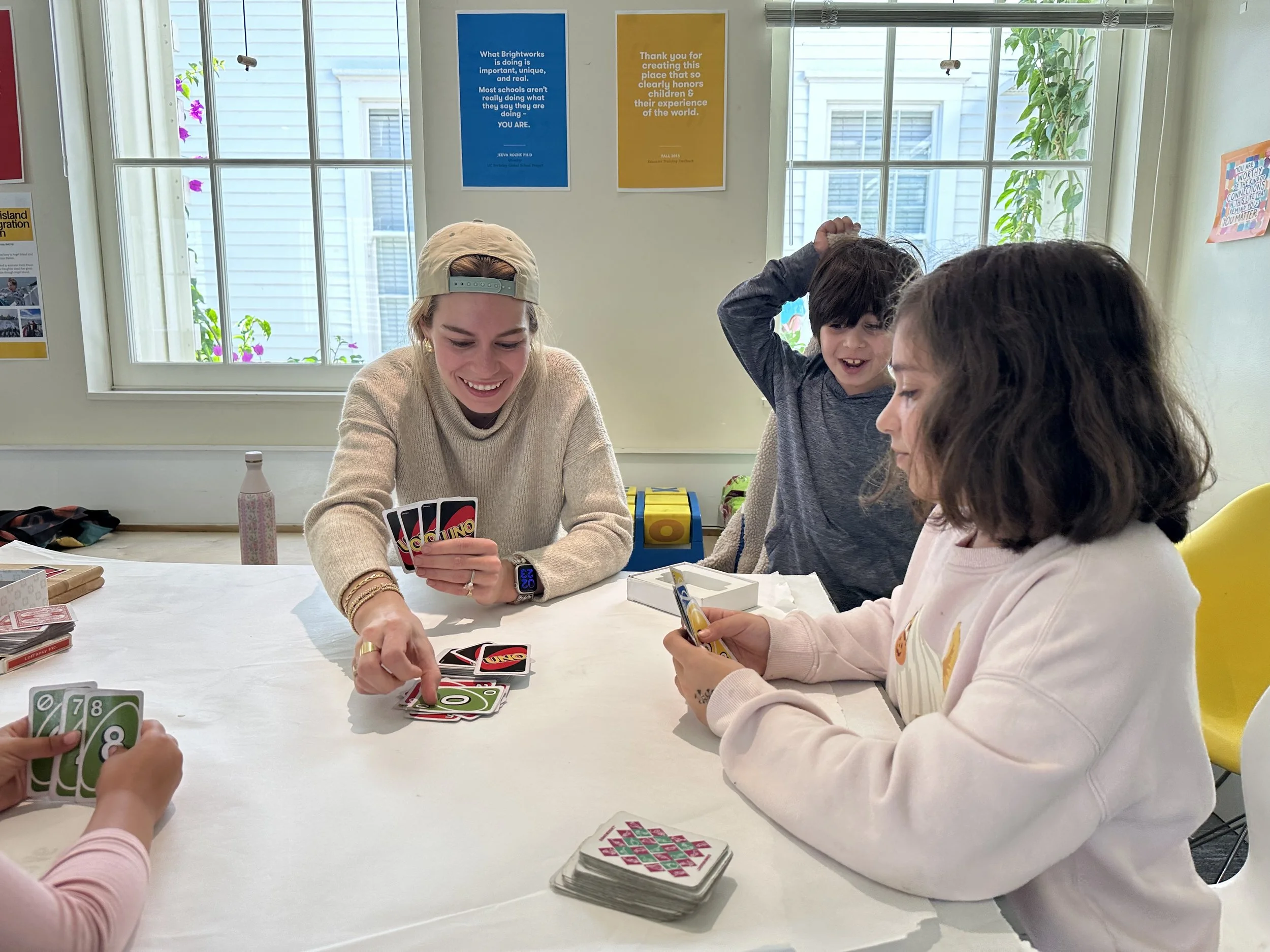
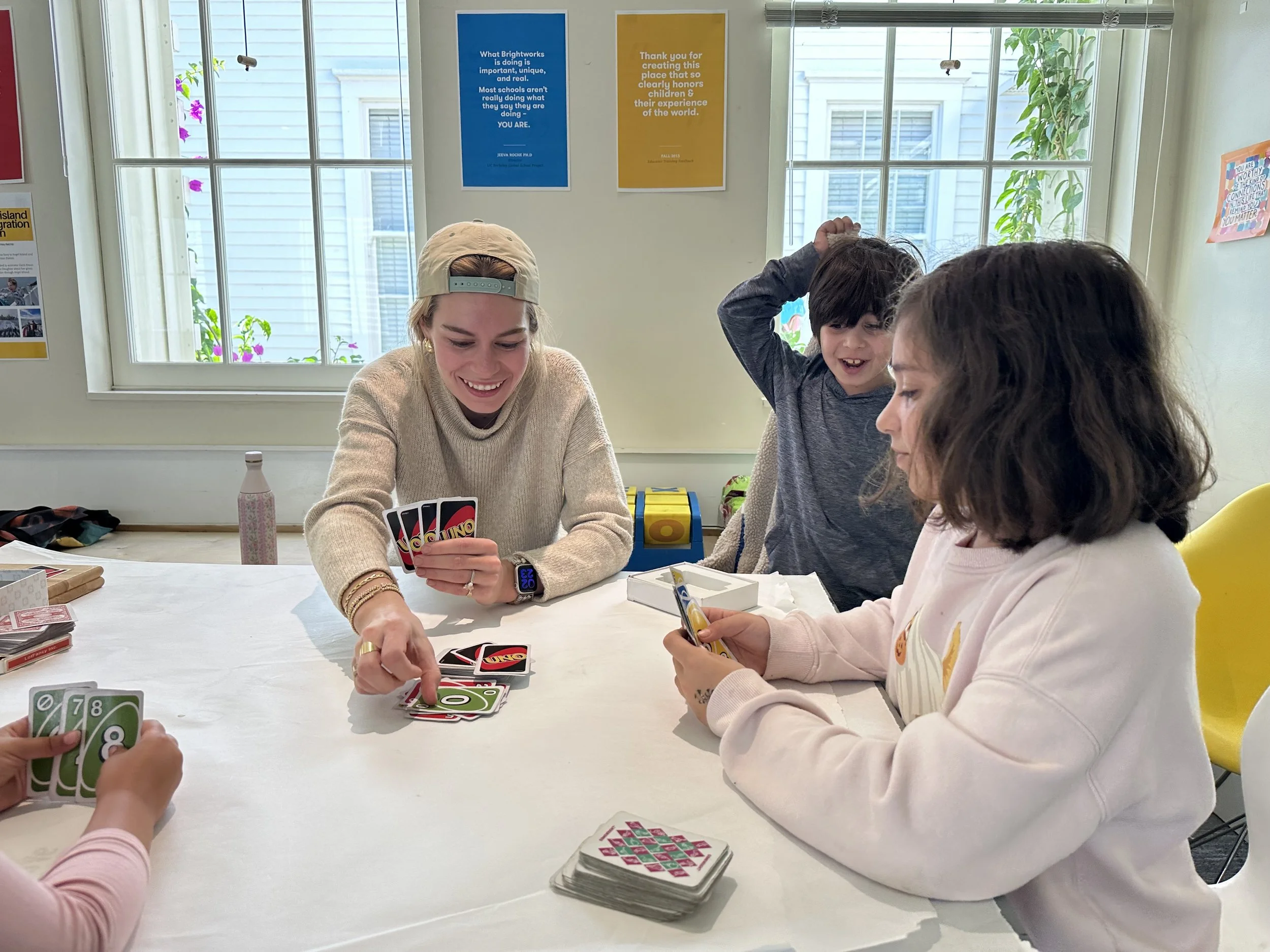
You may have noticed that our first weeks at Brightworks look, from the outside, like a lot of games, walks, shared meal time, and low-stakes creative play. That is entirely by design. Social-emotional belonging is the prerequisite for cognitive risk-taking — a principle aligned with the work of Harvard's Making Caring Common project.
Before a student can safely operate a chop saw, defend a design decision, or critique a peer's essay, they must first know — in their body, not just their head — that they are safe in their school.
So in the first month of each school year, we don't just "get to know each other." We co-create a culture of psychological safety that will sustain the high-level learning to come. The play you see in September is the foundation that the rigor will stand on later. It is some of the most important work we do all year.
Community Arc: Making Room to Explore Every Identity
What can a chair reveal about the way we learn? What can a collage teach us about belonging?
At Brightworks, students explore these questions through making — turning furniture, images, materials, and ideas into opportunities to understand themselves and one another.
Each class takes on a Community-Identity project during the first three weeks of the school year. When students examine identity as something both personal and shared, they build the connections that sustain collaboration and empathy all year. This year, projects ranged from designing chairs that respond to different ways of learning, to building a collage that makes many identities visible, to imagining communal seating as an act of care.
Brightworks’ guiding commitment: “each child will demonstrate self awareness, confidence, family pride, and positive social identities.”
Identity Chairs: Designing for the Ways We Learn
(Upper Elementary School)
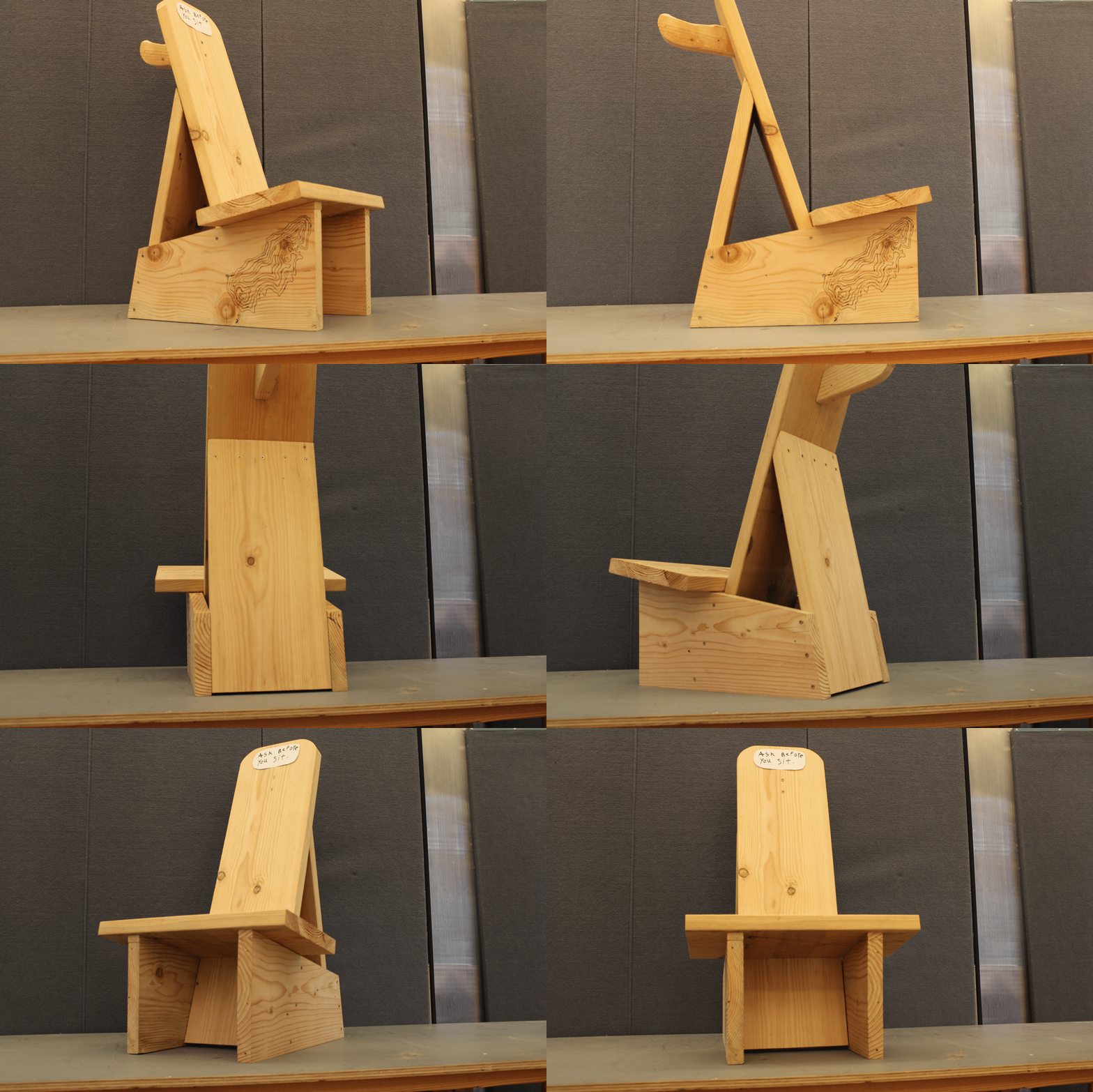
Our Upper Elementary students have been talking about identity — as people and as learners. Since everyone's brain works differently, students set out to make those differences visible by creating chairs that function best for the ways they learn.
The project began with a simple but open-ended question: what makes a successful chair? Many students measured stools for inspiration. Others sought out materials connected to their interests, such as climbing rope. Along the way they read books, watched videos, wrote reflectively, and played games that helped them recognize both the parts of their identities they share and the parts that set them apart.
Students studied the red lawn chairs in the Presidio, measured chairs in the classroom, developed sketches, and collaborated with High School students to use 3-D printers and build prototypes. They created their first iterations and painted them, and they plan to keep testing, tweaking, and re-iterating as the year goes on.
Some ideas came from students' prior experience making chairs. The process also made room for an important design reality: chairs may break, and breaking leads to revision. As students shared space, materials, and ideas, they were building chairs and community at the same time.
In their own words
"My goal for this project was to build as much as I could. I really enjoyed when I helped people."
"Something that challenged me during my project was putting on the pillow and staples."
"My goal for this project was to make it sturdy. I was surprised it took a long time."
Everything Is Interesting: A Collage of Community
(Middle School)
For the Community-Identity mini-arc, our Middle School groups came together to create a large collage inspired by the art of Peter Tunney. Their goal was to showcase the identities of every member while practising thoughtful collaboration.
The work required students to make consequential decisions together: the board would be 2 feet by 12 feet; the centerpiece would be the phrase "Everything Is Interesting"; the board would be painted blue; and the images and objects could be anything interesting or important to identity. They also deliberated carefully about how to share the space.
The final piece mirrors the real work of joining a community — whose space gets protected, what gets shared, and what connection actually looks like. The overlapping elements show how interconnected the community is. We hope visitors will learn about the students' identities, see the strength of the community, and be reminded that Everything Is Interesting.
In their own words
"It was a cool project because it was fun to see everybody's ideas and what they like."
"This was a collaborative project because everyone was working together. I like the artsy element and that you can add what you like without being too constrained."
"I like this project because everyone can contribute to it. I also like that you can add a lot of designs and different things to it, as well as the range of all of the things that we added. For example it could be really personal or just a random thing that you like."
"I love this project because I love collaging! It's fun to take something that wasn't yours and alter it to make it your own."
Communal Seating: Designing an Act of Care
(High School)
How is the act of creating a seat a gesture of community care? This was the guiding question for our High School group project during the three-week Community-Identity mini-arc, and it gave students an opening into the intersection of furniture design and social justice. Thanks to Sam, our Director of Learning, for the question.
It was also our High Schooler’s first time this year working through a full design process:
Precedent research
Brainstorming
Low-fidelity prototyping
Mid-review
Synthesizing feedback
High-fidelity prototyping
Storytelling
For the first two weeks, students researched precedents — seats that create community. They began inside Brightworks, took a field trip with Upper Elementary students to the red Share Chairs in the Presidio, and then looked for examples in their own lives. Those chairs, designed by Gehl Studio, were the right inspiration: one of our third graders even took to surfing on them.
Students closed their brainstorming by generating more than 100 ideas in two and a half minutes, then began sketching their first concept — an interactive bench inspired by the piano, where people sit on different keys that play different sounds.
Learning Together, Building Community
Across these projects, Brightworks students made identity tangible. Upper Elementary students considered how a chair could support different ways of learning. Middle School students negotiated shared space while assembling a collage of many individual perspectives. High School students examined how furniture design might express community care, and worked through a full design process for the first time.
The projects also show that collaboration is not separate from making. It is part of the material — in the measurements, the sketches, the prototypes, the decisions, the overlapping images, the shared tools, the feedback, and the revisions. Students practised noticing what makes each person distinct while discovering what they can build together.
The shared takeaway: when students make room for one another's ideas, identities, and ways of learning, the work becomes more than a finished object. It becomes a visible expression of belonging.
And then the hard part begins
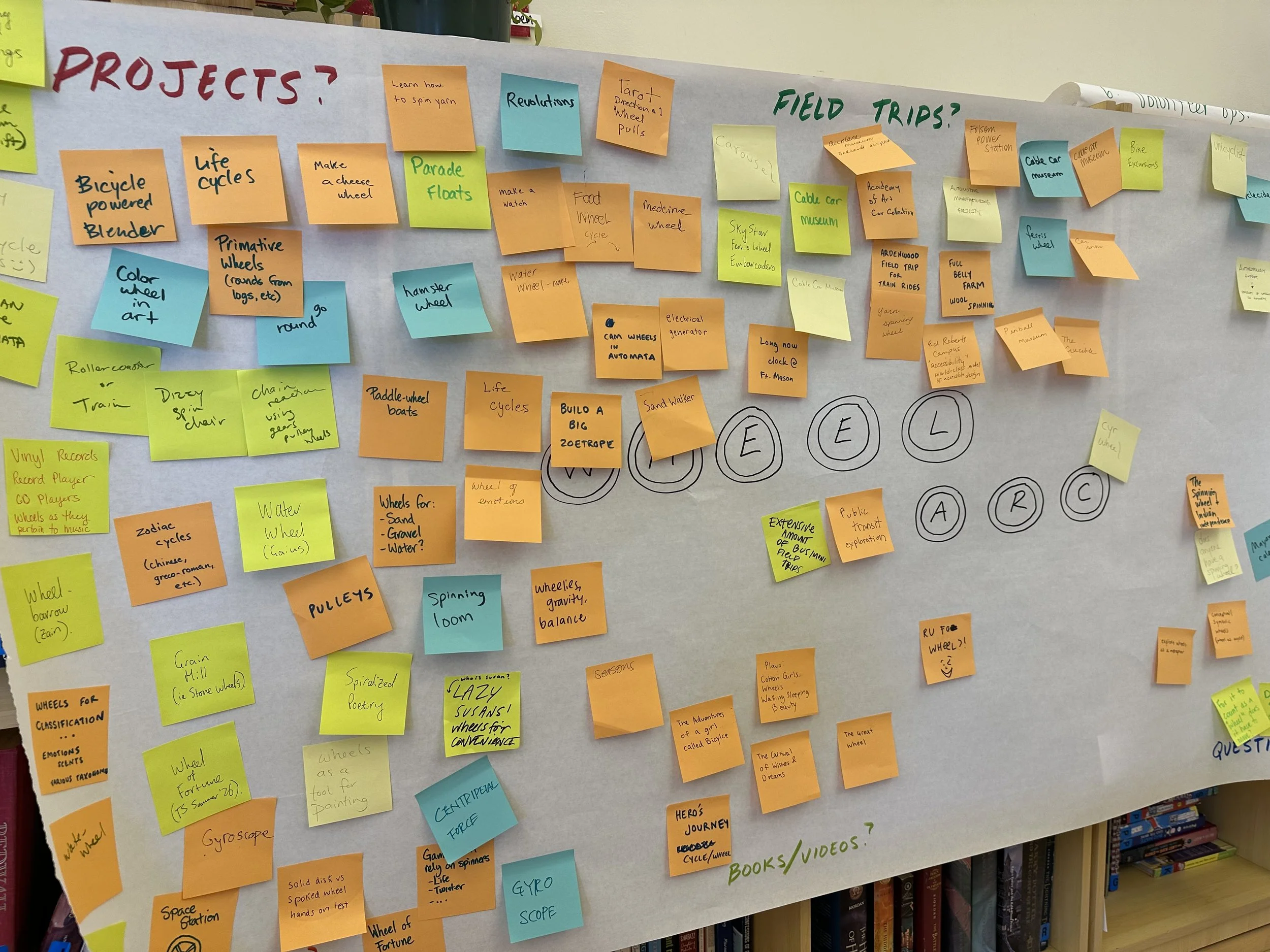
Three weeks later, this work ended and the Wheel Arc began.
The same Upper Elementary students who measured stools for their identity chairs are now writing Declarations — formal project proposals with a pitch, a budget, a list of outside experts they have already contacted, measurable goals, and a week-by-week calendar. Then they defend them before a panel that includes adults who had no hand in designing the project. The panel asks hard questions. Revision is expected before any work begins.
That is what the September foundation was for. A student who knows they are safe will attempt something difficult, fail at it publicly, and try again. A student who doesn't, won't.
Come see it
The best way to understand any of this is to watch it happen. We hold weekday tours during the school day and weekend open houses for families who can't get away midweek — and you're welcome at either.